
Menu
Signs You Need Concrete Foundation Repair in Union City Homes
Concrete Foundation Repair Union City
Early warning signs of concrete foundation repair help protect Union City residents from costly structural damage and potential personal injury risks. Foundation problems usually occur over time, so identifying them early will save Union City residents money by limiting the cost of repair and ensuring they retain a significant portion of their property value. The urban nature of Union City, as well as its soil conditions and proximity to bodies of water, all affect how quickly foundations deteriorate in this area. By recognizing these warning signs, Union City residents can act promptly before minor issues become major structural problems. Other factors, such as local freeze/thaw cycle activity, soil settlement, and drainage issues, also add to the stress on a structure that ultimately causes various visible and operational signs that there is a problem with the foundation of the home.
Visible Cracks in Foundation Walls
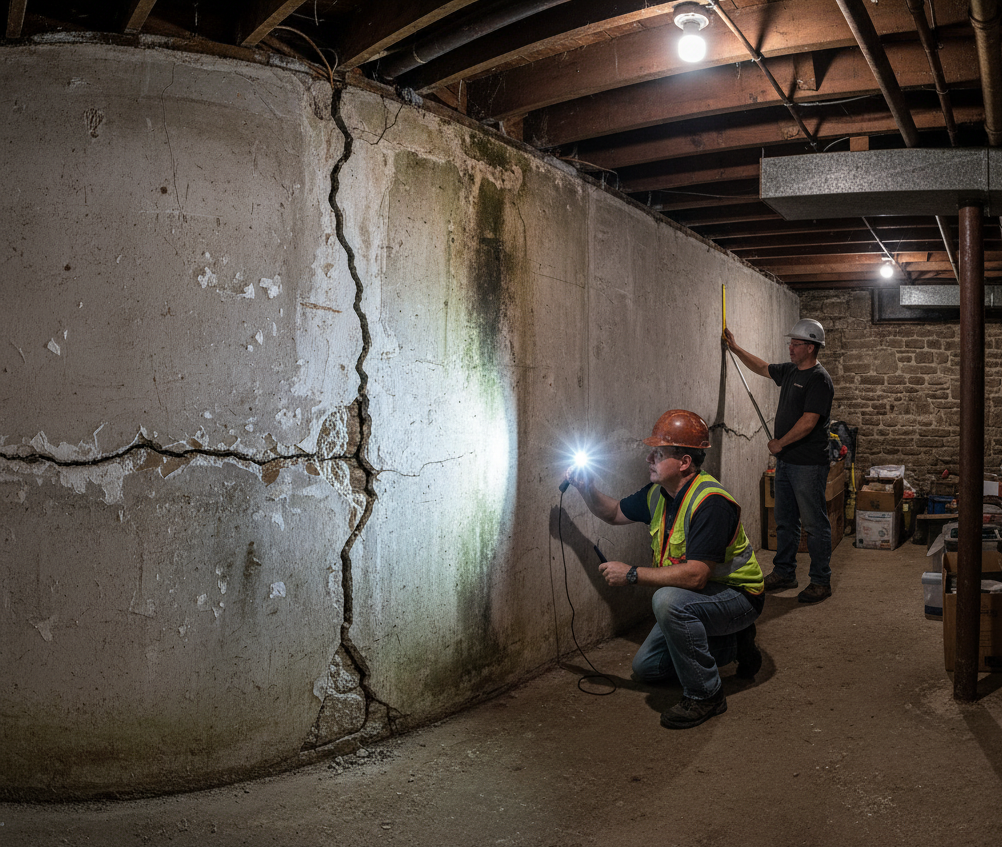
The cracks you see in your foundation are likely the first sign that your home has structural problems that will need to be repaired by a qualified contractor using concrete foundation repair techniques. The direction and size of the cracks determine whether they are a cause for concern. A vertical crack (a crack running up and down) is typical of normal concrete settling and is usually no wider than 1/16 of an inch. If the crack is horizontal (running side to side), it may be a sign of serious problems related to soil pressure against the foundation walls, which could eventually result in wall bowing and complete structural failure. Stair-step cracks in block foundations signify uneven settlement in the foundation area, and action needs to be taken to prevent further deterioration. Homeowners should check cracks for new activity and document how they grow to determine whether active movement is occurring in the foundation.
Types of Cracks and What They Mean
There are several types of cracks, each indicating different foundation issues. Differentiating among them helps determine the correct course of action for repair. Diagonal cracks usually develop at corners where windows and/or doors meet the foundation and are typically caused by uneven settlement. Settlement cracks continue to grow as soil shifts and require professional stabilization to prevent ongoing movement. Shrinkage cracks develop during the first year after concrete is poured and usually remain unchanged unless another issue develops. Areas of Union City with clay soils may experience expansion and contraction due to temperature changes, placing additional stress on foundations and creating characteristic crack patterns that experienced concrete contractors recognize.
Warning Signs Inside the Home
Interior warning signs often appear before exterior symptoms. Doors or windows that suddenly bind or refuse to open or close often indicate foundation movement, stressing the framing system. Gaps around window and door frames suggest the foundation has shifted and pulled the walls away from openings. Nails popping out of drywall result from wall movement caused by foundation shifts. Interior wall cracks, especially around doors and windows, often mirror foundation settlement patterns and require professional evaluation.
Floors That Are Uneven or Sloping
Uneven or sloping floors indicate underlying foundation problems that require concrete foundation repair services in Union City. Foundation movement places stress on flooring systems, resulting in cracked tiles or loose flooring materials. Gaps between walls and floors or between walls and ceilings also signal significant settlement or structural wall movement. Floors that bounce or sag may indicate inadequate foundation support in crawl space or basement areas. Using a level or rolling ball can help homeowners identify subtle slope changes associated with foundation settlement that warrant professional assessment.
Signs of Structural Problems Outside the Home
Exterior structural issues become visible when foundation stress affects the building envelope. Gaps in siding, brick, or stone veneer indicate foundation movement impacting wall alignment. The separation between porches or steps and the main structure suggests differential settlement between foundation elements. A leaning or separating chimney indicates foundation issues affecting load-bearing components. Cracks in brick or stone veneer typically follow foundation movement patterns and must be addressed promptly to prevent further structural damage.
Water Damage Issues
Water-related problems frequently accompany foundation issues and can escalate quickly. Water intrusion through foundation cracks into basements signals both moisture and structural concerns. Efflorescence, appearing as white, chalky deposits on concrete surfaces, indicates water migration through foundation materials that will worsen over time. Poor drainage leads to saturated soil and increased hydrostatic pressure against foundation walls. Standing water around the foundation after storms clearly indicates drainage problems that contribute to additional structural stress and require comprehensive water management and stabilization solutions.
Indicators of Problems in the Basement or Crawl Space
Below-grade areas often show the earliest and most severe foundation problems requiring immediate repair. Horizontal basement wall cracks indicate dangerous soil pressure that can lead to wall collapse without reinforcement. Bowing or leaning basement walls are advanced warning signs requiring urgent professional attention. Musty odors and high humidity levels often indicate foundation cracks allowing moisture intrusion. Pests may also use foundation cracks as entry points, causing additional structural and indoor air quality concerns.
Identifying Structural Settlement Problems
Foundation settlement creates recognizable movement patterns that experienced contractors evaluate when determining repair methods. Differential settlement occurs when different foundation sections settle at varying rates, creating concentrated structural stress. Uniform settlement causes less damage but still requires monitoring. In urban areas like Union City, soil consolidation may result from nearby construction, utility work, or natural soil changes. Professionals analyze soil conditions and foundation movement to identify causes and develop long-term stabilization plans.
Seasonal and Weather-Related Symptoms
New Jersey’s freeze-thaw cycles create identifiable seasonal stresses on foundations. Problems often worsen during spring thaws when soil conditions change rapidly. Freezing water and ice dams may signal drainage issues requiring comprehensive solutions. Summer droughts cause clay soils to contract away from foundations, while wet conditions cause expansion and increased pressure. Monitoring seasonal changes helps professionals identify cyclical weather-related impacts on foundation stability.
Factors Contributing to Environmental Pressures on Foundations
Union City’s urban environment presents unique foundation challenges. Nearby construction can create vibrations and disturb soil stability. Tree roots may penetrate foundations, applying pressure and altering moisture levels. Poor lot grading directs water toward foundations, accelerating deterioration. Stormwater issues and street flooding saturate the surrounding soil, increasing hydrostatic pressure and requiring professional mitigation measures.
When Should You Get Professional Help?
Delaying professional assistance allows minor foundation issues to develop into costly structural problems. The presence of multiple warning signs warrants immediate evaluation. Horizontal cracks, rapid crack growth, or severe wall bowing require emergency inspection. Structural changes affecting home safety, such as severely sticking doors or significant floor slopes, demand prompt professional response. Union City Concrete Works can evaluate your foundation and address concrete foundation issues before they worsen and become more expensive to repair.